In conversation with:
Seine Ligtenberg
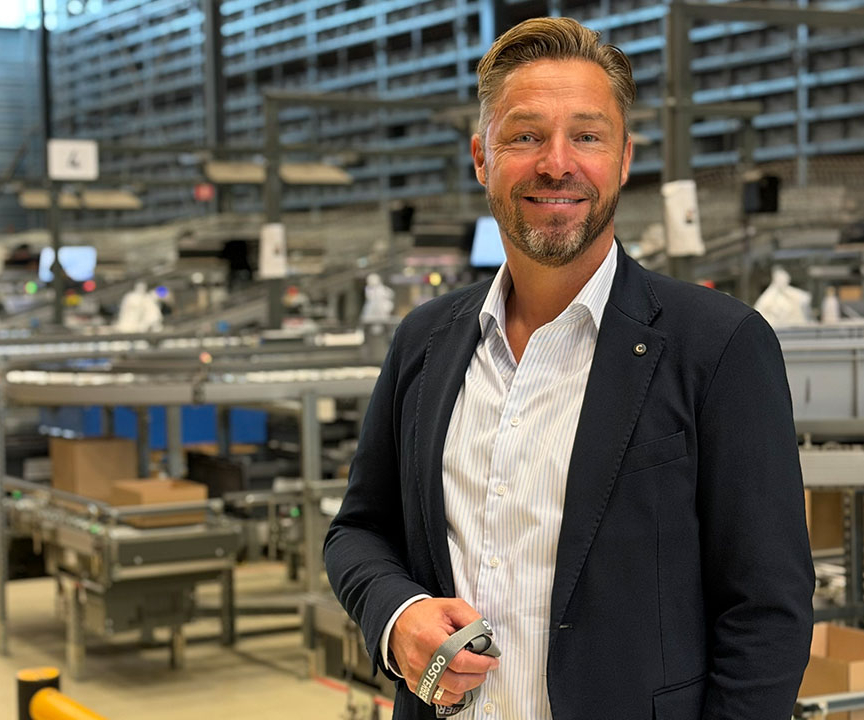
A year ago, Seine Ligtenberg took over as managing director of Koninklijke Oosterberg. It was a logical move for someone who spent much of his career in finance but had worked with technical wholesalers for years. He first encountered Oosterberg while working in corporate banking at ING. Now he holds the top position himself. It is time to get to know the man behind the role.
Starting with the customer
Seine is 55, was born in Hardenberg and has four children. After studying management, economics and law, he joined Rabobank at the age of 25. He then moved to ING, where he focused primarily on sales and revenue models. “I always start with the customer. That is really my guiding principle.”
That customer-focused approach has been a constant throughout his career. “For a self-employed professional or a small business, for example, convenience is important. In the mid-market, personal contact matters, while a key account requires specialist attention. In that respect, banking is not so different from wholesale.”
His eventual move to Oosterberg may have been less obvious than it seems, but it was not entirely coincidental either. At ING Corporate Banking, Seine had extensive contact with technical wholesalers. As a result, he already knew Oosterberg before joining the company.
“What I like about Oosterberg is that it is a true family business.”
From pianos to technical wholesale
Oosterberg has been in business for 133 years. It started out selling pianos, later adding radios and household appliances. Over the years, Oosterberg developed into a technical wholesaler.
“What I like about Oosterberg is that it is a true family business. Responsibility is delegated throughout the organization. Our branch managers, for example, are real entrepreneurs.”
At the same time, Oosterberg is not standing still. The company is continually broadening its view of the market. It has taken its first steps with a business unit for sustainable solutions. Security and industry are also receiving more attention, with water and climate solutions to follow. According to Seine, this development brings an interesting challenge: how do you preserve your expertise and culture as your organization continues to expand into new areas?
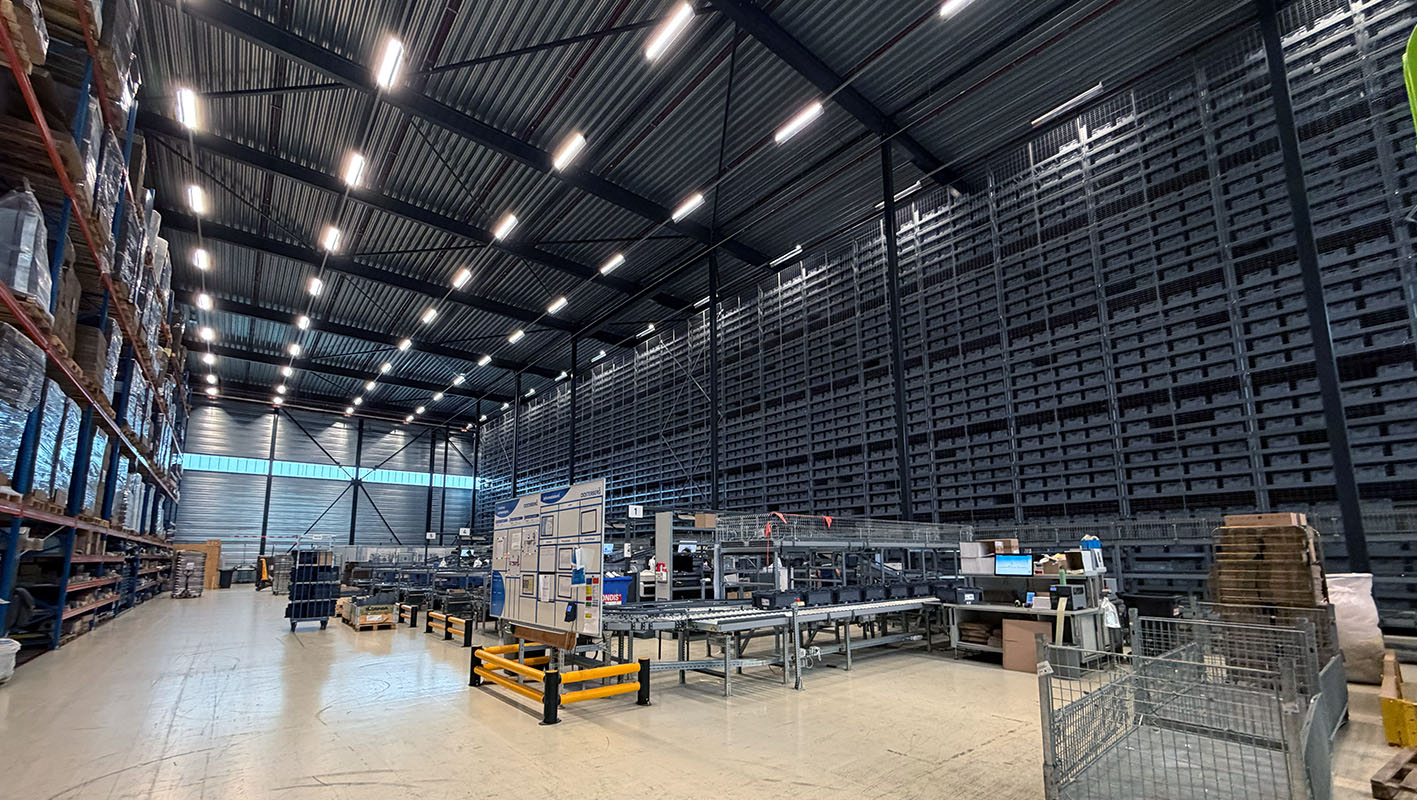
“That is why we work with business units. With a relatively small team of specialists, we can make expertise available to all 21 of our branches. That way, we do not need the same specialists everywhere, but everyone can benefit from their knowledge.”
A large SME
Seine deliberately describes Oosterberg as a large SME. “Not a small corporation,” he adds. He believes the difference lies primarily in how people within the organization do their work.
“Personal responsibility, individuality and professionalism are important. We want to give people room to contribute their own ideas.”
That starts with new employees. During a culture day, they are, as it were, “painted blue”: they are introduced to Oosterberg’s ways of working and values. “You choose people not only for what they can do, but also for whether they fit into our family.”
That family philosophy does not mean that every branch has to be the same. Quite the opposite. Each branch has its own culture, suited to its region. Oosterberg wants to preserve that identity.
“Oosterberg is a quintessentially Dutch company, and we want to keep it that way. We have no ambition to operate outside the Netherlands. Every region is different, and that local character makes us a valuable partner for both customers and suppliers.”
“Wholesalers can increasingly play a coordinating role. Positioned between suppliers and customers, they can bring different needs together.”
A more complex market
His background has given Seine a thorough understanding of the market and its developments. After a period of strong growth, he sees the market beginning to shift. At the same time, the market has become more transparent. That may sound simpler, but Seine believes it actually makes things more complex.
“Wholesalers can increasingly play a coordinating role. Positioned between suppliers and customers, they can bring different needs together. If a customer faces a difficult problem, you need to be able to help solve it.”
In his view, expertise is the real added value. But that expertise is under pressure. As the workforce ages, the sector is losing a great deal of experience. “As an organization, you need to make sure you transfer and retain knowledge. That makes being a good employer more important than ever.” Oosterberg does this in part by giving employees significant responsibility. Responsibility brings freedom, and Seine believes that freedom is a good fit for the company’s culture.
Impatient? Quite a bit.
After a year as managing director, Seine has a clear sense of which qualities help him in his role – and which sometimes get in his way.
“I am analytical and enjoy thinking about revenue models that put the customer first. That helps me enormously.”
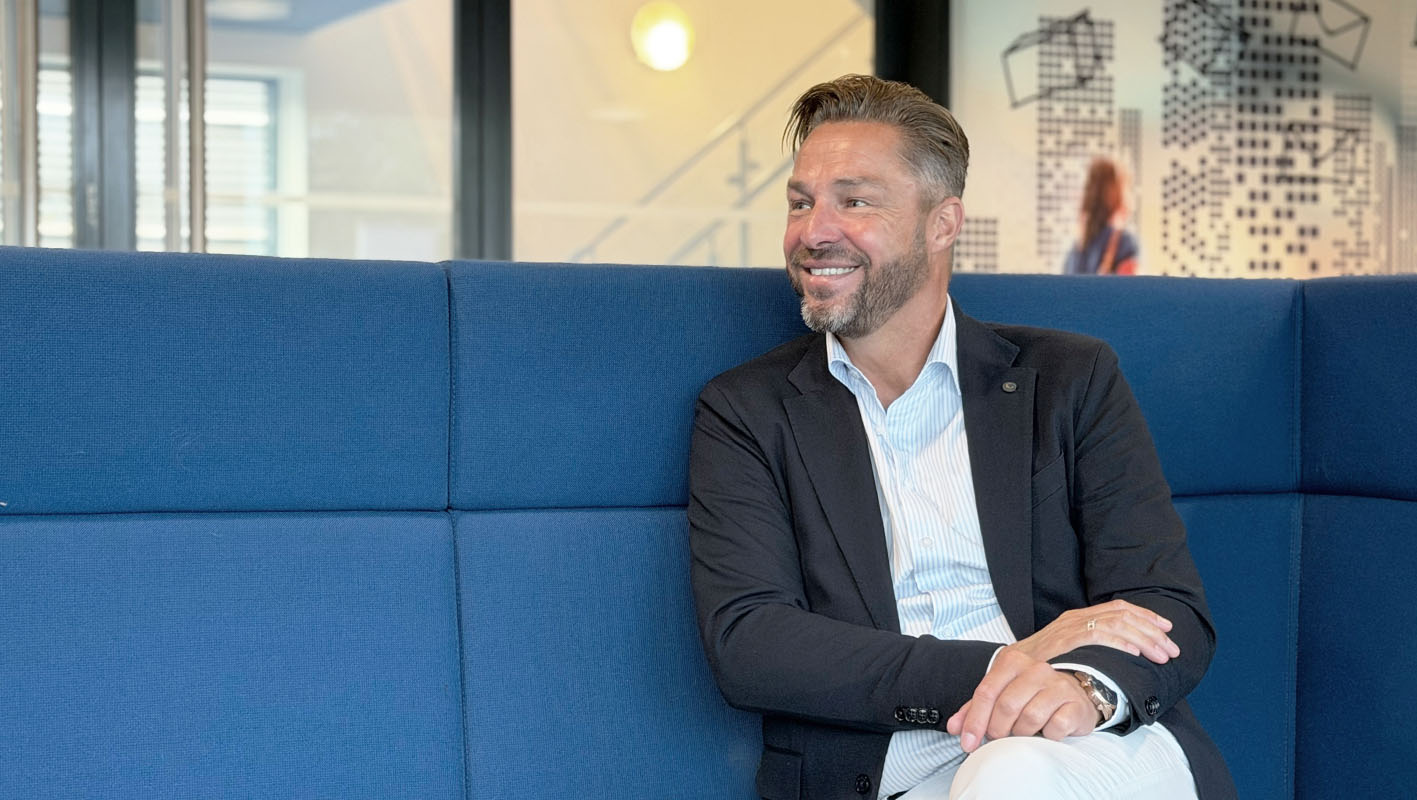
But there is another side. “I am very impatient. In a relatively conservative market and organization, that can be quite a challenge.”
At the same time, he sees this as a good match for Oosterberg’s character. “I can put my strategic thinking to good use here. A family business is an enterprise for the long term. I can make good use of my commercial insight here, but you also have to be willing to look further ahead.”
He does not find every aspect of being a managing director equally interesting. After all, every job has its chores. “Reporting to the accountant, expense claims… They have to be done, but they are not my favorite activities.”
What does energize him? Thinking about the future together. “I enjoy thinking about strategy with the management team and stakeholders.” Listening was also a major focus during his first few months at Oosterberg. In his first three months, Seine visited every branch. “It was very enjoyable and informative. You hear what is happening and see the differences, but also the similarities. Then you can think about how we can do even better together.”
He would like to see the gap between head office and the branches become even smaller. “Our company is in transition. At a time like that, good contact with the branches is essential.” Not making a decision is also a decision
Putting off a decision is not really Seine’s style. “I generally just make a decision.” There is one condition, however: he wants to have enough information. “If I feel I am missing information or do not understand something, I postpone a decision. But I can usually make the call. Not making a decision is usually worse.” He believes the sector could be more decisive. “That is not embedded everywhere, and I think that is a shame.”
The quiet strength
When people think of a technical wholesaler, products, warehouses and sales tend to come to mind. But Seine believes an important part of its strength lies in what is not always immediately visible.
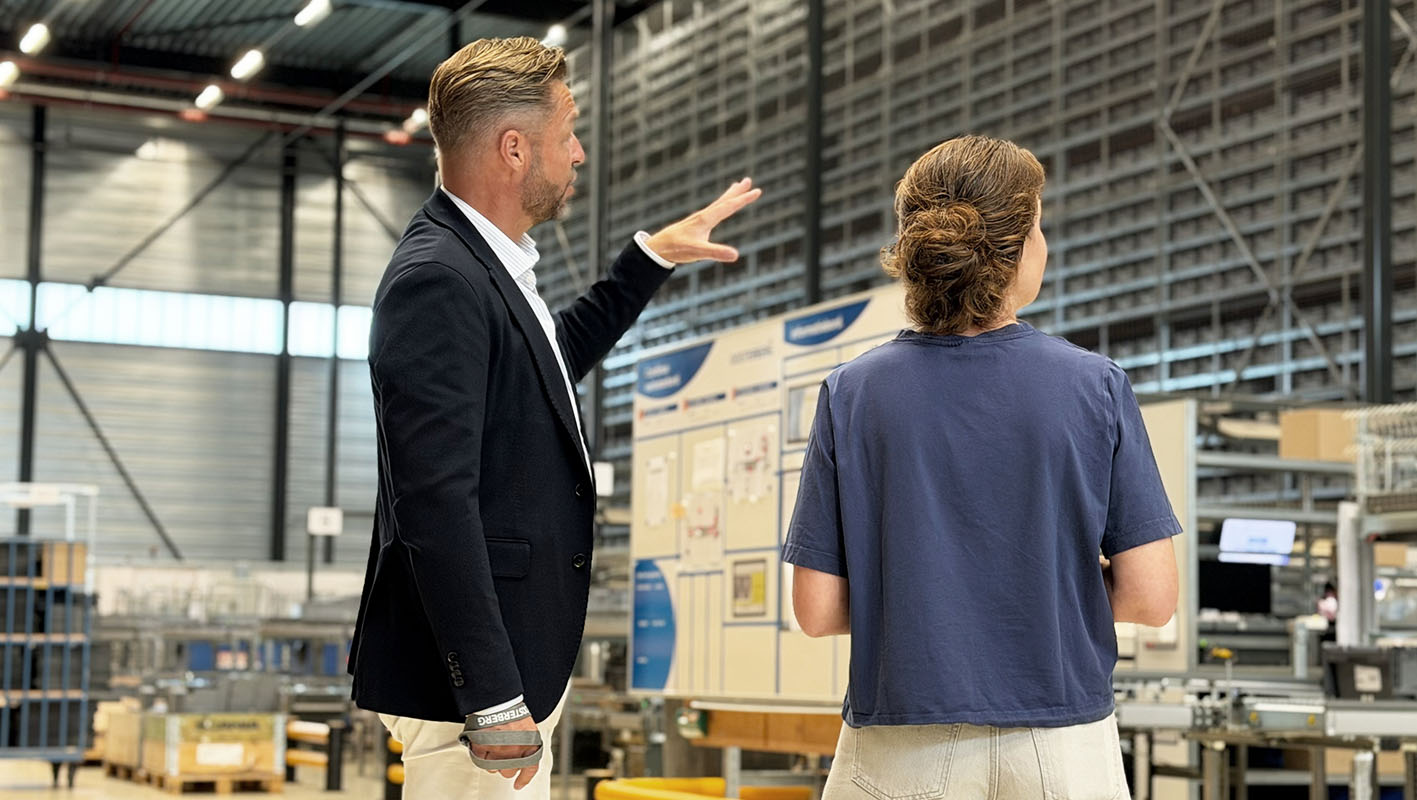
“Logistics and transport are a quiet strength. Their complexity is often underestimated. They are essential and form the core of our organization.”
He also points to the branch managers. “They are real entrepreneurs. They are responsible for purchasing, sales and staff, but also for the coffee and the waste bins.”
This decentralization naturally brings challenges. But it is a deliberate choice. “They really are their own businesses. We do not impose the same approach everywhere.” This is where one of Oosterberg’s core values comes into play: individuality.
“People often think you need to know the products. But I do not consider that essential.”
You do not have to be a product expert
One of Seine’s striking views is that the managing director of a technical wholesaler does not necessarily need to know every product.
“People often think you need to know the products. But I do not consider that essential. You do not need detailed product knowledge to set a good strategy for the future.”
What you do need to understand, he says, is the customer’s needs and the customer journey.
“It is a business of people serving people, with personal service. The question is: how do you do that in the best possible way?” Account managers play an important role in this. They build connections and, according to Seine, must be team players throughout the supply chain.
Oosterberg itself is also increasingly taking on that connecting role. Examples include its supplier day and initiatives such as the innovation canteen. “These allow us to share knowledge and create connections between people and organizations.” This is important because digitalization and personal contact are not mutually exclusive. “You can see that 60 to 70 percent of revenue comes through digital channels. At the same time, there is a strong need for personal contact and – there it is again – knowledge.”
According to Seine, young, medium-sized companies in particular need advice. That is why Oosterberg also organizes training. “Once again, this helps us build connections and support our customers.”
A successful first year?
What would make Seine consider his first year at Oosterberg a success? Not reaching a particular revenue figure or introducing a spectacular change. For him, it is about something more fundamental.
“Having a solid foundation for the future. A foundation supported throughout the organization. A clear destination: who are we, and how do we get there?” Will he succeed? Seine has no doubt. “We will make it happen!”
And despite all the ambitions and changes, what remains above all is pride. “I am proud to hold this position at Koninklijke Oosterberg.”
