Smart, scalable, and future-proof
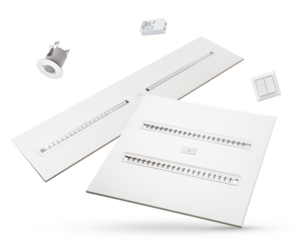
When you choose Interlight Thinq, you have a complete lighting control system that is scalable and future-proof. With the sensors, you can make any fixture smart in no time! Fixtures with integrated sensor are also available. Using the app, you set the fixtures to your needs. Want to make the fixtures even smarter later by connecting them to the Internet? You can! The internet connection is integrated.
Quick links:

Ceiling
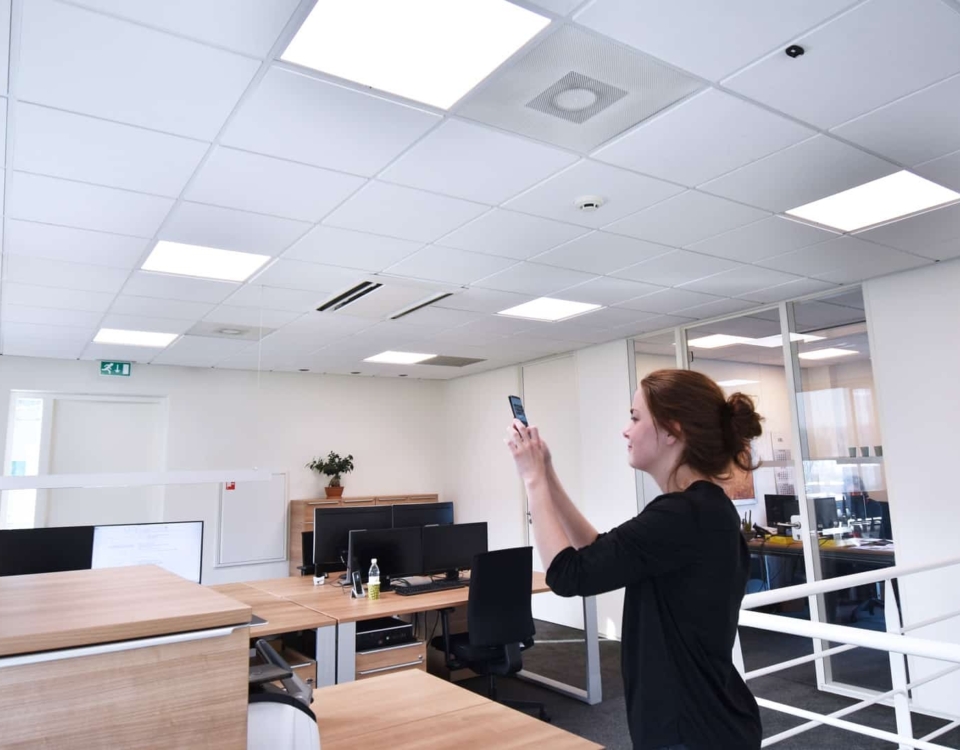
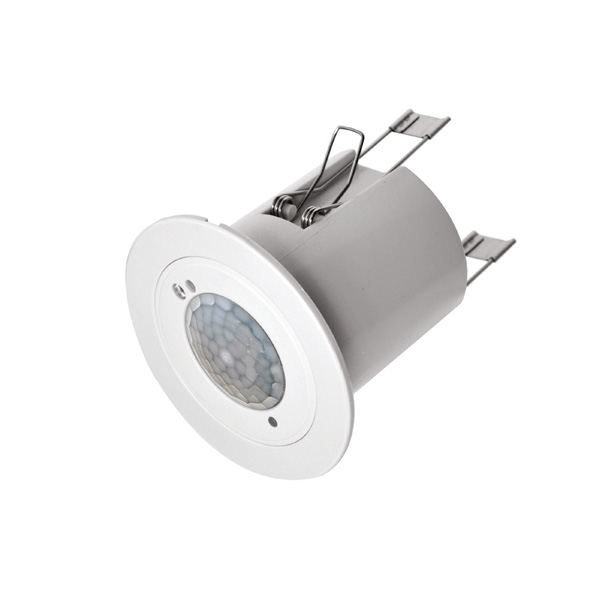
The ceiling is the ideal place to place sensors. Thinq sensors and components are not dependent on a (wifi ) network, but build their own wireless network together. A network with unlimited scalability, up to more than 10,000 nodes (network points). So applicable in small and very large buildings.
Data
A Thinq network can provide – in addition to lighting control – a great deal of data to other systems in a building. And all this at a very low total cost of ownership, due to the high degree of ease of installation and thus significant savings in time, material and errors.

Brand-independent
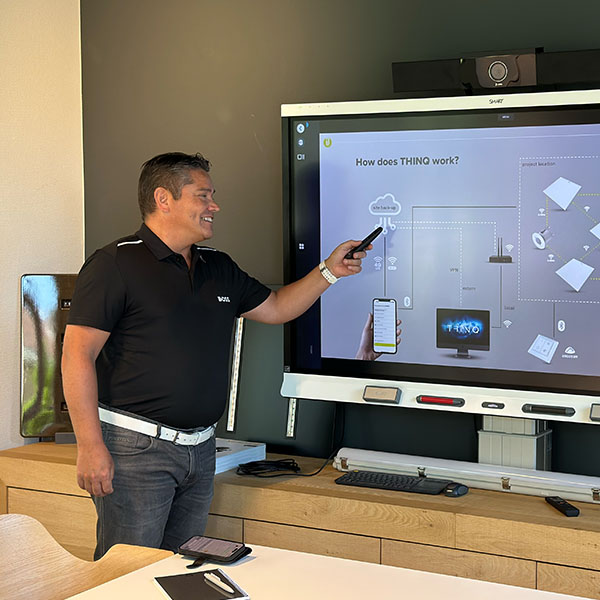
Thinq sensors are suitable for any type of LED lighting. Whether it is 0-10V, DALI, PWM or non-dimmable, there is always a Thinq sensor that can control the fixture in question. This also makes it a brand-independent lighting control system. Do you want to use multiple types of fixtures in a project? With Thinq you turn them into one. With the free Thinq app, you set up the fixtures in the same way and all the fixtures form one powerful network in which they work together seamlessly.
Technology & software
Interlight Thinq uses the network technology of Wirepas (wirepas.com) and the software of INGY (ingy.nl). The built-up network is virtually infinitely scalable and each node can serve as a router. The role of this node is dynamic and can be easily adjusted. Regardless of circumstances; nodes in a Wirepas mesh network find their own alternative routes to get to the correct final destination.

Smart building data
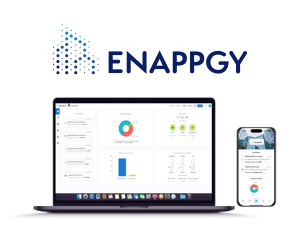
Interlight Thinq’s sensors and other hardware can be perfectly used to collect smart building data and control systems such as HVAC, asset tracking or indoor navigation. For displaying smart building information, Enappgy’s dashboard tool can be used.

Ideal saving
Led lighting obviously offers nice energy savings. But applying sensors makes the overall system even more efficient. After all, it is often humans themselves who neglect to turn off lighting when it is no longer needed. Below you can read more about the main applications within the Thinq lighting control system.
Functionalities

Presence
The lights are turned on the moment people are present and as soon as no one is left in the room in question, the lights automatically turn off after a certain amount of time.

Daylight compensation
Daylight compensation is an energy-saving feature in every Thinq sensor. The light sensor continuously measures the light present in the room and automatically adjusts the fixture to maintain the set light level. This way, you always have just enough light!

Dim levels
The delay time and corresponding dimming levels can be set via the app. This can be done at three levels: max level, medium level and min level. For each level, the duration and dimming level can be set separately, according to the end user’s wishes.

Group
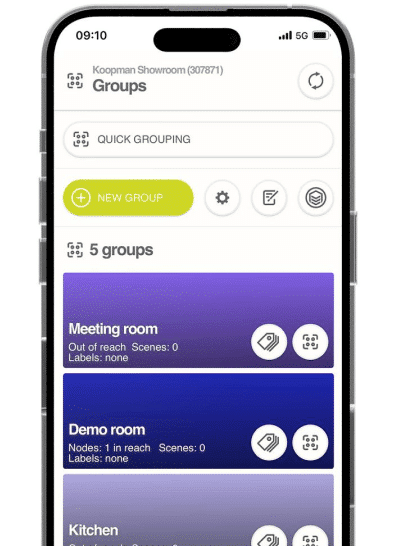
Grouping ensures that all desired nodes (network points) are combined and function as one group. This is useful for making appropriate settings and rules. For example, an office space may consist of one or more groups.

Neighbouring
After classifying groups, they can be linked together: neighboring. When the light in one of the groups is activated, the other groups will also be activated and vice versa. The relationship is symmetrical. The function can be used, for example, in larger offices to keep surrounding groups activated as well.

Corridor hold
This feature allows you to leave lights on in a place other than where presence is measured. Good examples are corridor lighting in an office or in a school building; as long as presence is still being measured in one of the offices or classrooms, the lighting in the corridor will also remain on. Hence the term “corridor hold.
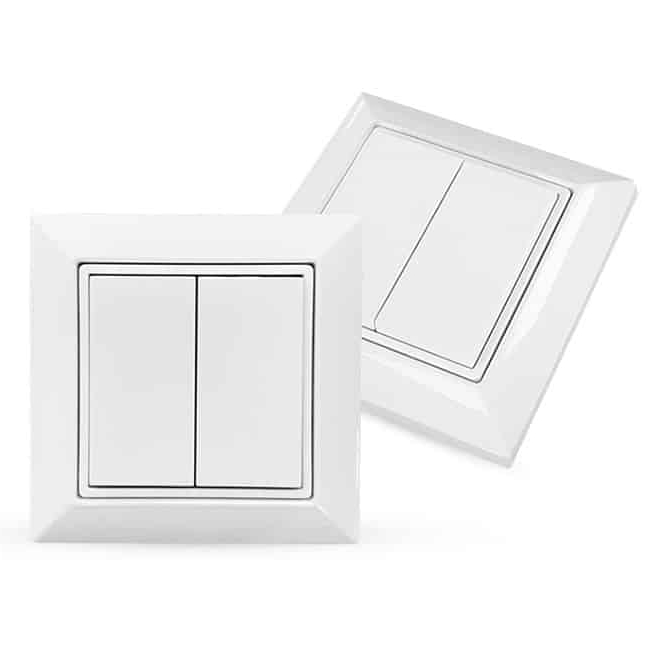
Wireless switches
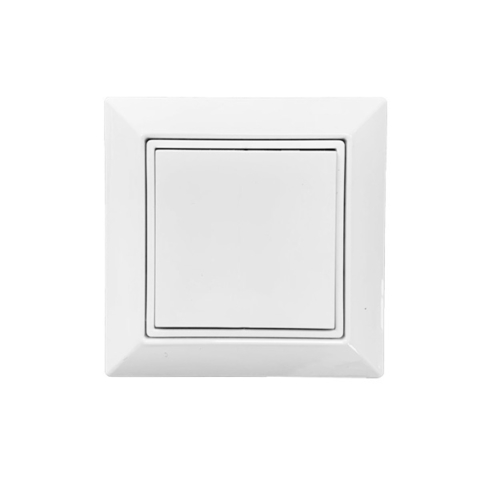
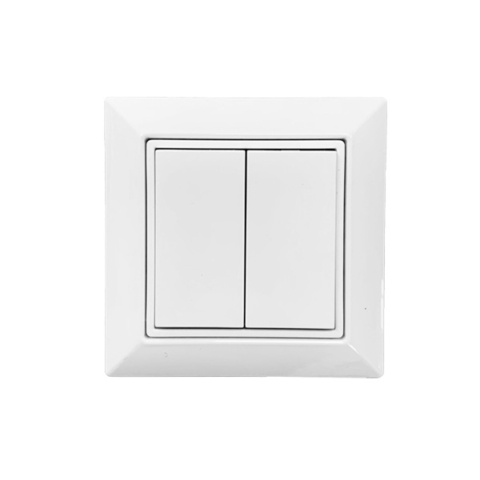
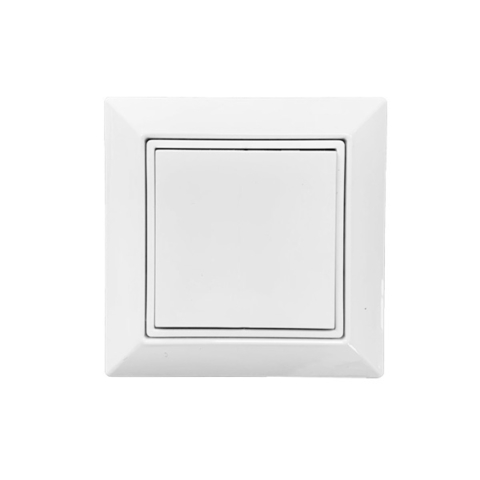
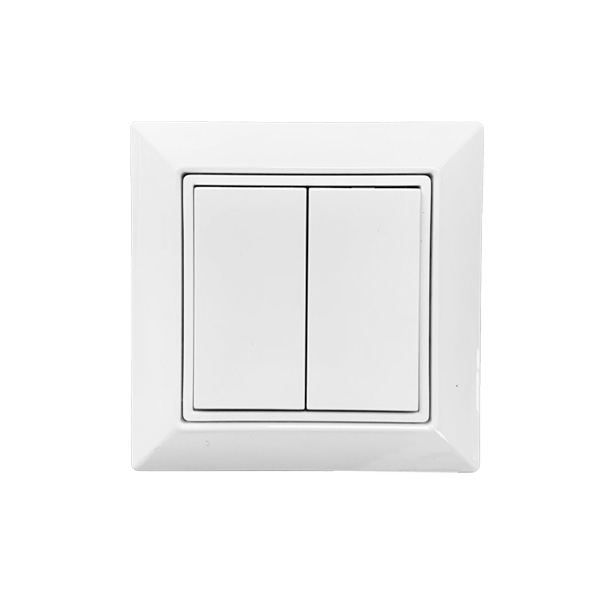
In some situations it is conceivable that – in addition to the set scenes and rules – there remains a need for decentralized switching of the lighting. For example, in classrooms or presentation rooms. Therefore, simply link wireless switches. The link with the Thinq app takes place by means of NFC (Near Field Communication) in a smartphone or tablet. Then the switch can be applied and configured in any location. The switch is easily movable and receives the required energy kinetically; without cable or batteries.
Savings
The application of the Thinq lighting control system provides enormous energy savings, making the payback period of the total installation very interesting. Below is an indication of the average energy savings.

Presence detection
Presence detection: up to 30% savings in offices, up to 80% savings in warehouses.

Daylight-dependent control
Daylight-dependent control: up to 40% savings in offices, up to 70% savings in facade zone.

Thinq light control system
Thinq light control system: up to 70% savings.
In addition to energy savings, application of the Thinq system also results in cost savings during installation work. The table below shows a wired lighting control system (DALI) versus wireless (Thinq). The average total savings with a Thinq system compared to a DALI system is around 10%, mainly due to savings in time and materials.
CostFixtures Sensors Control cables Central unit Installation boxes |
DALIYes Yes Yes Yes Yes |
ThinqYes Yes No No Yes |
Comments
– Can also be in fixture Not required Not required Lower than DALI |

Beyond lighting
The Thinq system is more than just lighting control. By installing a gateway, a lot of data can be unlocked to other systems in the building. These include:
– CO2 sensors linked to the Thinq network provide CO2 monitoring and control of ventilation.
– Presence sensors help control air conditioning and heating.
– Asset tracking: valuable, durable assets such as digital screens, computers, hospital beds, etc. can be tracked in a building through the sensors present.
– Indoor navigation.
– Occupancy analysis: monitoring the occupancy of spaces in a building.
Thinq fixtures
-

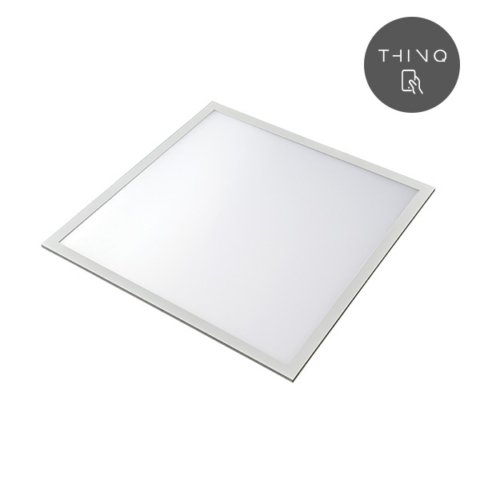
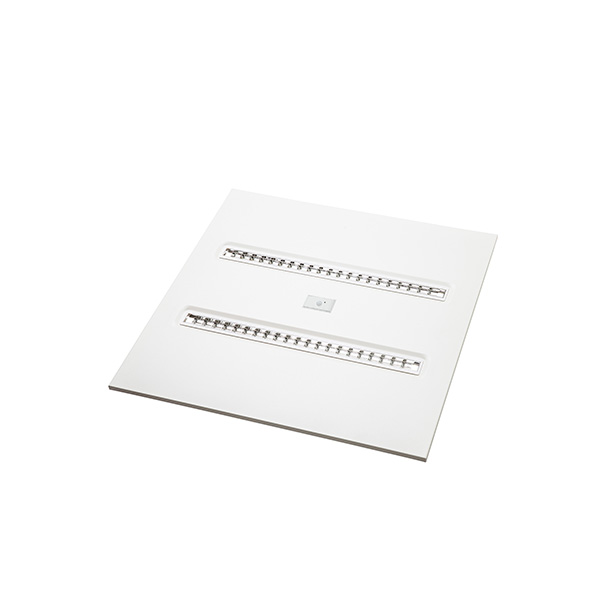
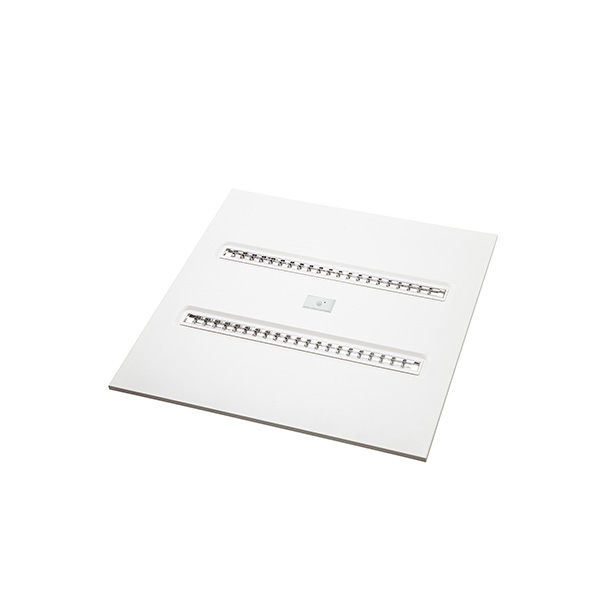
Thinq Next+ led panel 30W (595x595x33mm) 3,000/3,500/4,000K UGR<19 incl. driver and microwave sensor
IL-PNT595U In stock197,95 -

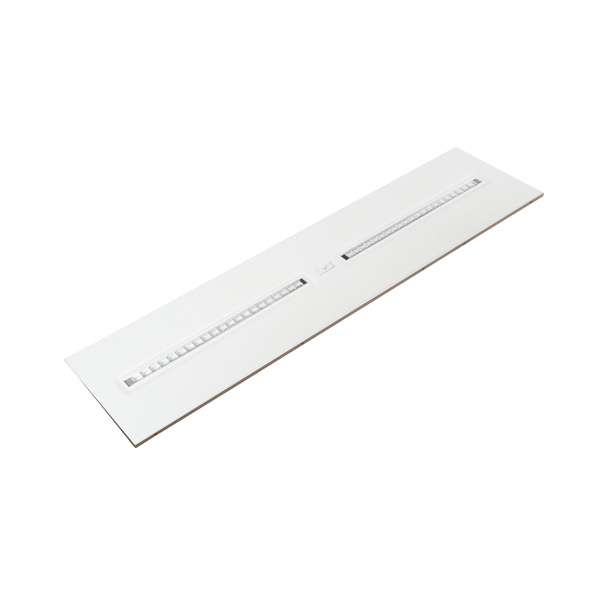
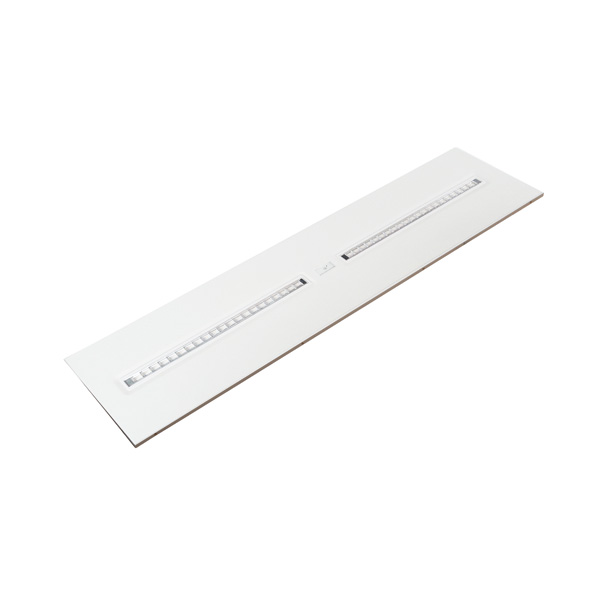
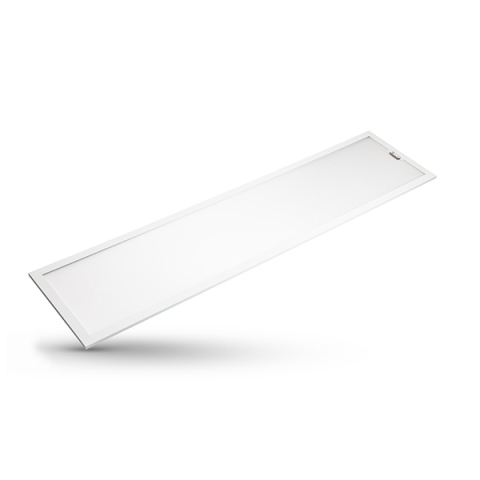
Thinq Orion led panel 28W (1195x295x30mm) 3,000K incl.driver & sensor
IL-PT195K3O Out of stock (back order possible)313,10 -
Thinq Orion led panel 28W (1195x295x30mm) 4,000K incl.driver & sensor
IL-PT195K4O Out of stock (back order possible)313,10 -
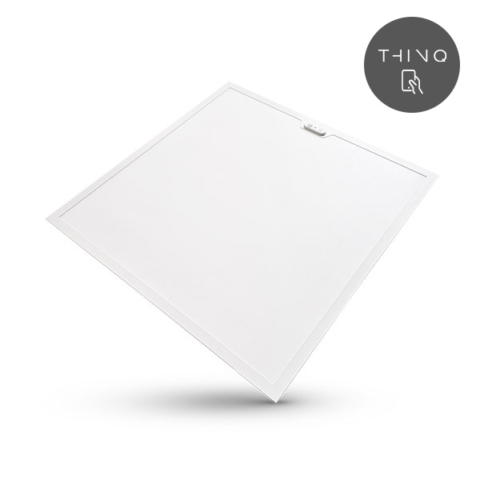
Thinq Orion led panel 28W (595x595x30mm) 3,000K incl. driver & sensor
IL-PT595K3O In stock313,10 -
Thinq Orion led panel 28W (595x595x30mm) 4,000K incl. driver & sensor
IL-PT595K4O Out of stock (back order possible)313,10 -
Thinq Dream+ led panel 30W (595x595x33mm) 3,000/3,500/4,000K CRI90 UGR<19 incl. D4i driver and PIR sensor
IL-PDT595PU In stock197,95 -
Thinq Dream+ led panel 30W (1195x295x33mm) 3,000/3,500/4,000K CRI90 UGR<19 incl. D4i driver and PIR sensor
IL-PDT195PU In stock200,35 -
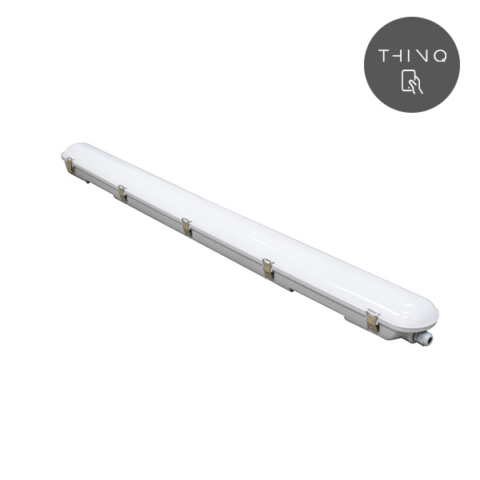
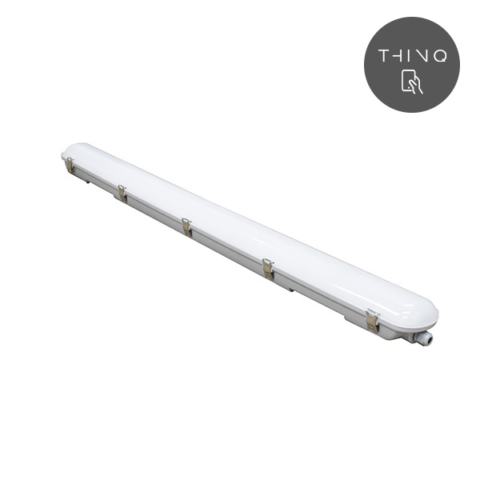
Thinq Dream led IP66 surface mounted 32W 4,300lm 1,200mm incl. driver & sensor
IL-WPT12033K4 In stock167,00 -
Thinq Dream led IP66 surface mounted 51W 6,900lm 1,500mm incl. driver & sensor
IL-WPT15050K4 In stock185,00
Drivers & accessories
-
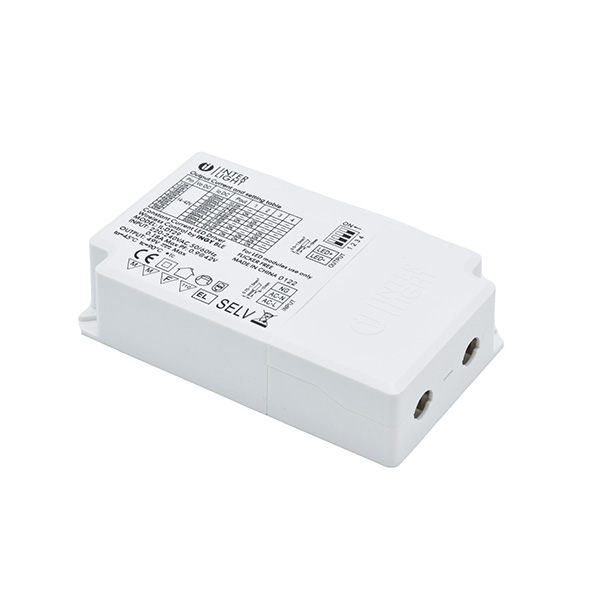
Thinq led driver dip switch 250 to 600mA
IL-DT29 In stock98,25 -
Thinq led driver dip switch 650 to 1,100mA
IL-DT48 In stock101,40 -
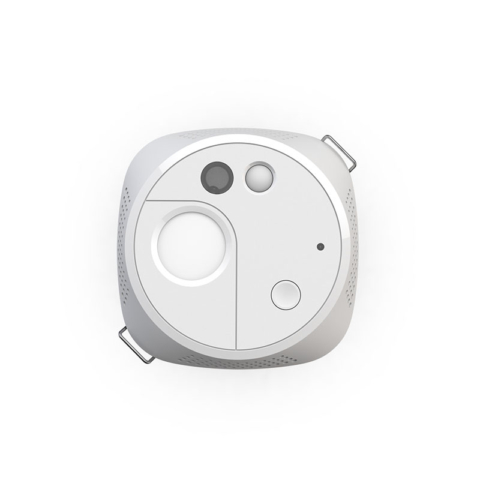
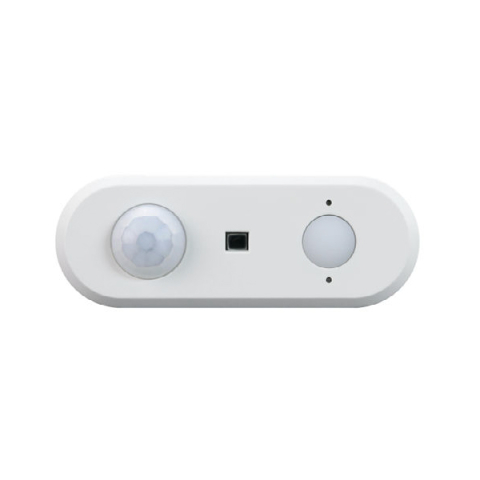
Thinq Mira wireless all-in-one ambient and presence sensor
IL-TMIRA Out of stock (back order possible)630,00 -
Thinq Dali stand-alone sensor
IL-TSDALISA In stock150,05 -
Thinq DALI2 built-in PIR sensor
IL-TSDALIBIPIR In stock65,75 -
Thinq wireless wallswitch EWSDB 2 buttons white (BLE >96.12)
IL-TWALL2BW In stock76,25 -
Thinq wireless wallswitch EWSDB 4 buttons white (BLE >96.12)
IL-TWALL4BW In stock76,25 -
Thinq wireless wallswitch EWSDB 2 buttons
IL-TWALL2B In stock154,35 -
Thinq wireless wallswitch EWSDB 4 buttons
IL-TWALL4B In stock154,35 -
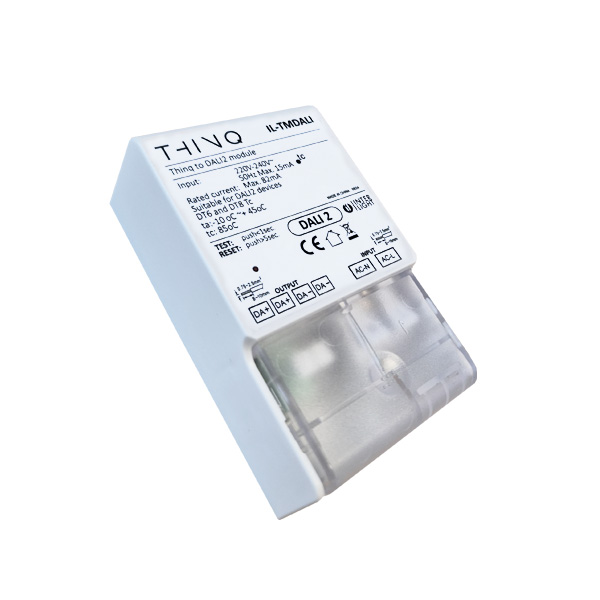
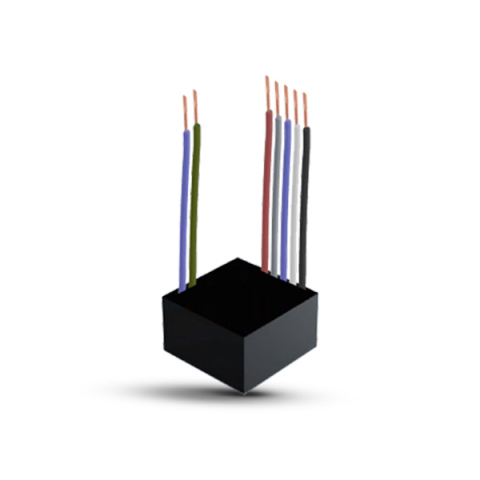
Thinq to DALI2 module
IL-TMDALI In stock61,95 -
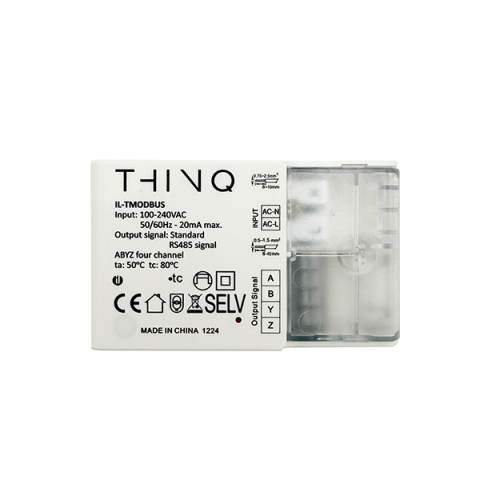
Thinq Modbus controller
IL-TMODBUS In stock110,25 -
Thinq 4 input control module
IL-T4INPUT In stock123,90 -
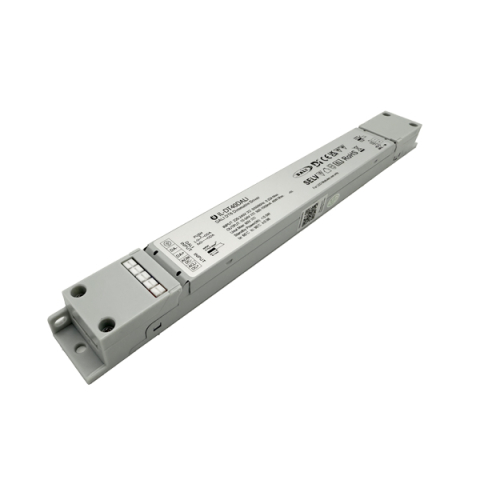
Thinq driver D4I DALI2 NFC 500 to 1,050mA/40W
IL-DT40DALI In stock70,70 -
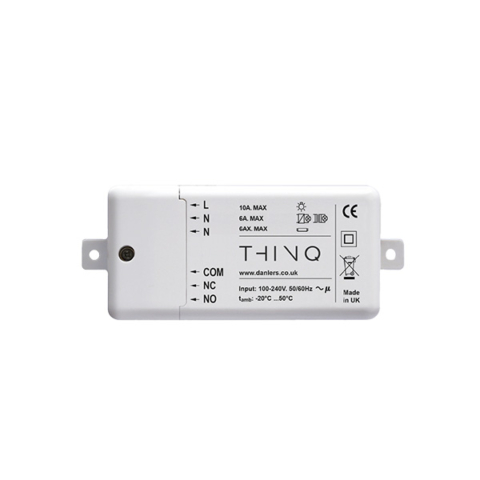
Thinq relay for on/off switching of electrical consumers
IL-TRATNH In stock156,00 -
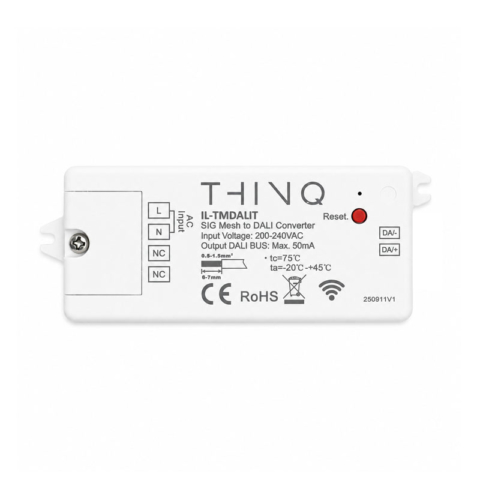
Thinq to DALI2 module special
IL-TMDALIT In stock99,75

Stay up to date with Thinq
Sign up for the Thinq newsletter and periodically receive the latest updates on our smart lighting system.
"*" indicates required fields
Download the app


App information
I am happy to help you!
I am happy to help you find a suitable solution to your problem. You can reach me through the contact options below.
Michel, Thinq expert